Building a compliance automation platform that transformed spreadsheets into scalable SaaS
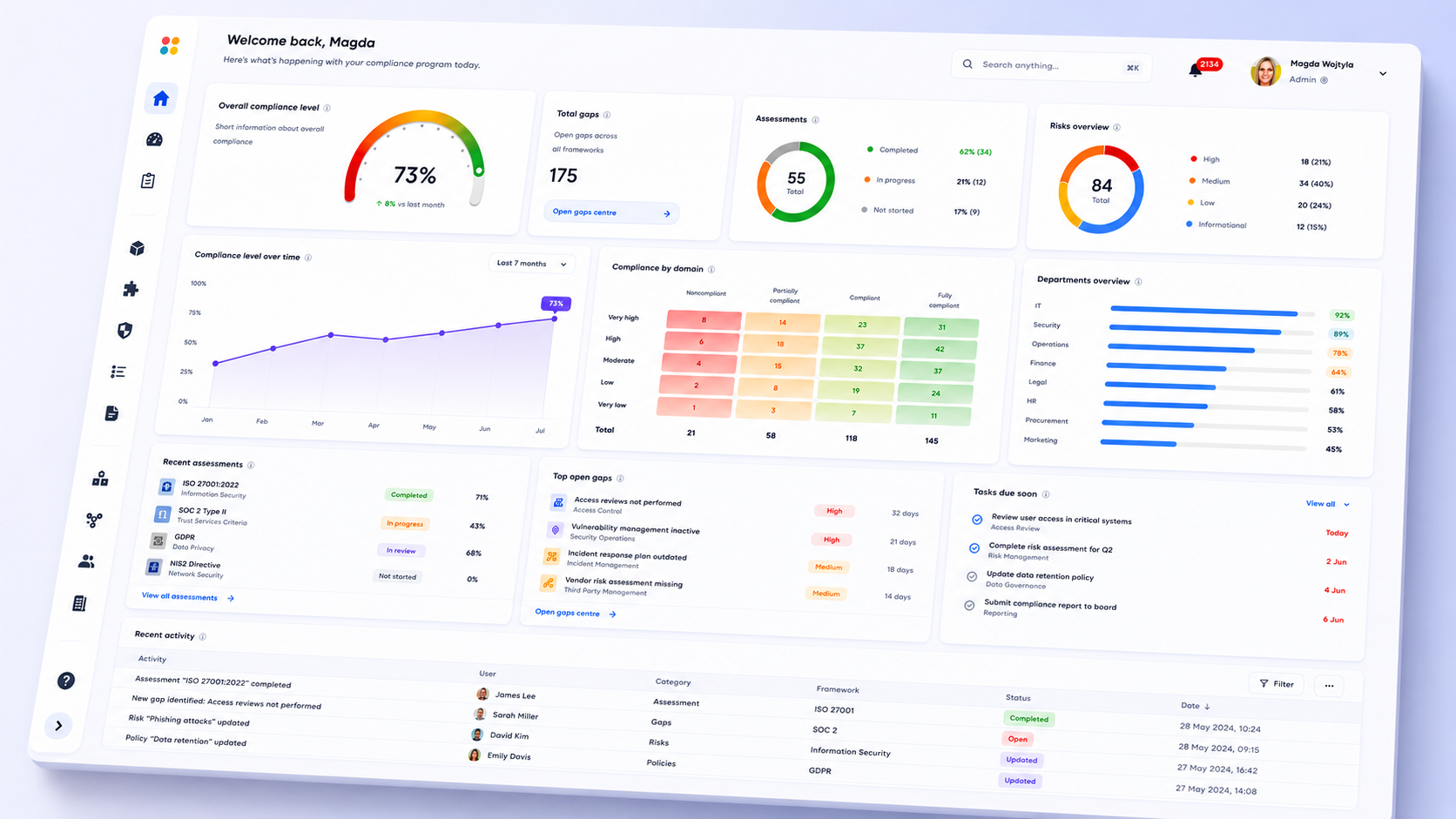
Designing a centralised platform that replaced fragmented spreadsheets, email coordination and disconnected tools—automating compliance workflows for organisations across multiple frameworks.
Major modules
Frameworks supported
Components designed
Workflows mapped
The challenge
Small to medium organisations
Growing orgs • multiple frameworks
Understanding compliance operations
We mapped how organisations actually managed compliance—through spreadsheets, email threads, and Monday.com workflows. The core insight: technical compliance work was straightforward. Administrative coordination was the bottleneck.
Designing a reusable architecture
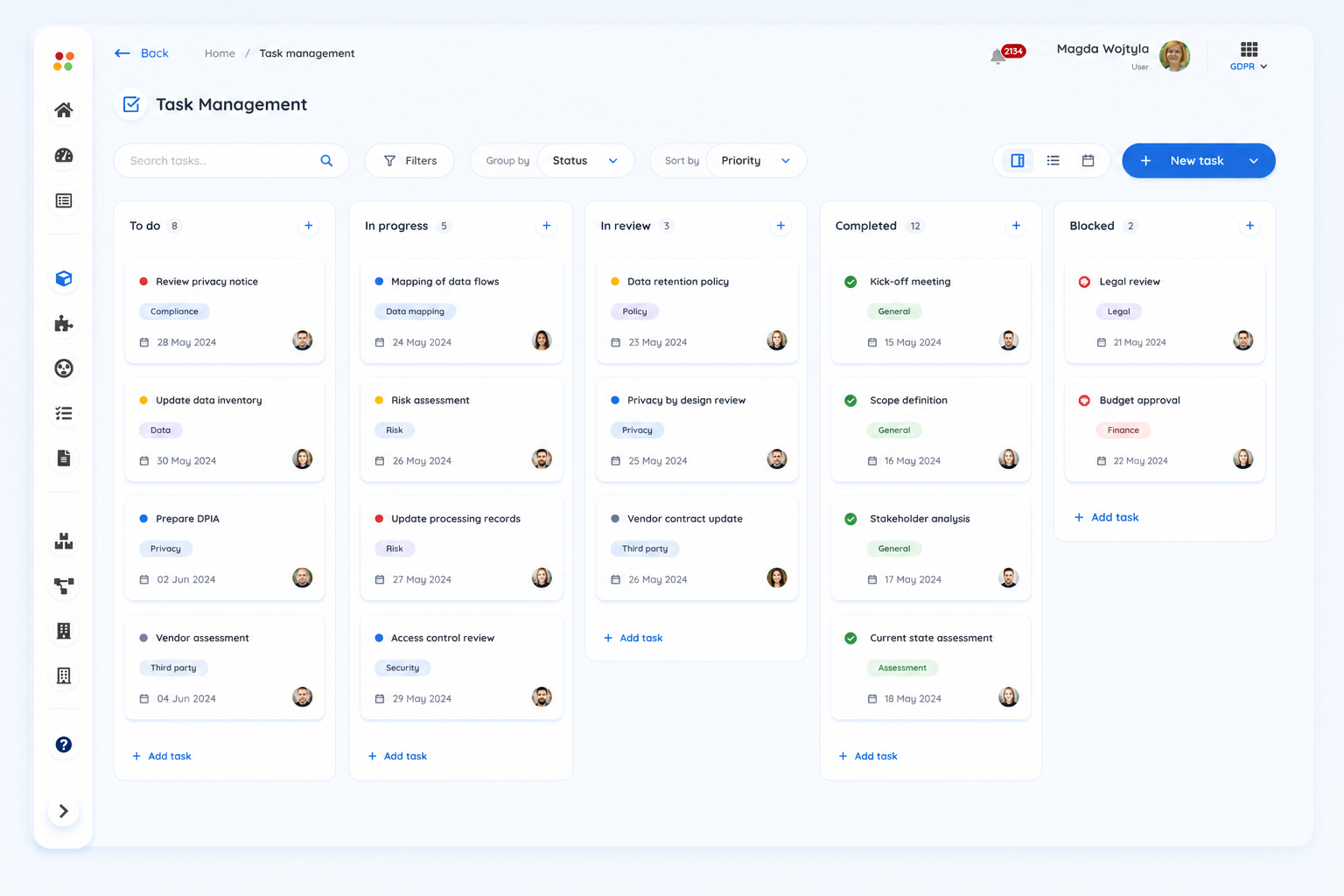
Rather than building framework-specific experiences, we created a scalable architecture where GDPR, ISO27001, NIS2 and other frameworks shared common patterns. Adding a new framework took hours, not weeks.
Building configuration tools
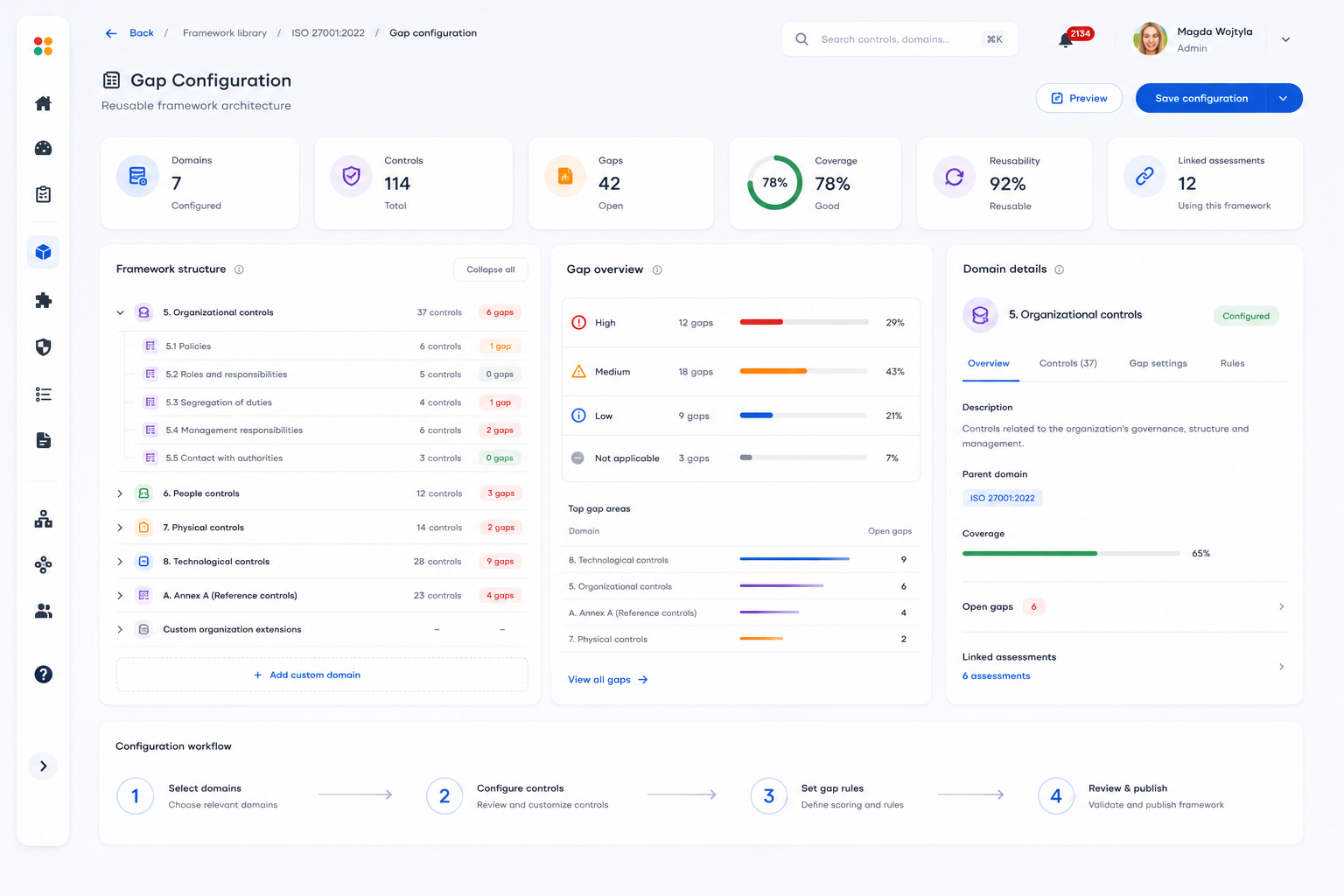
We designed a visual framework builder that allowed compliance teams to create assessments without code. This reduced deployment time and eliminated the need for custom development for each framework variation.
Connecting compliance and data governance
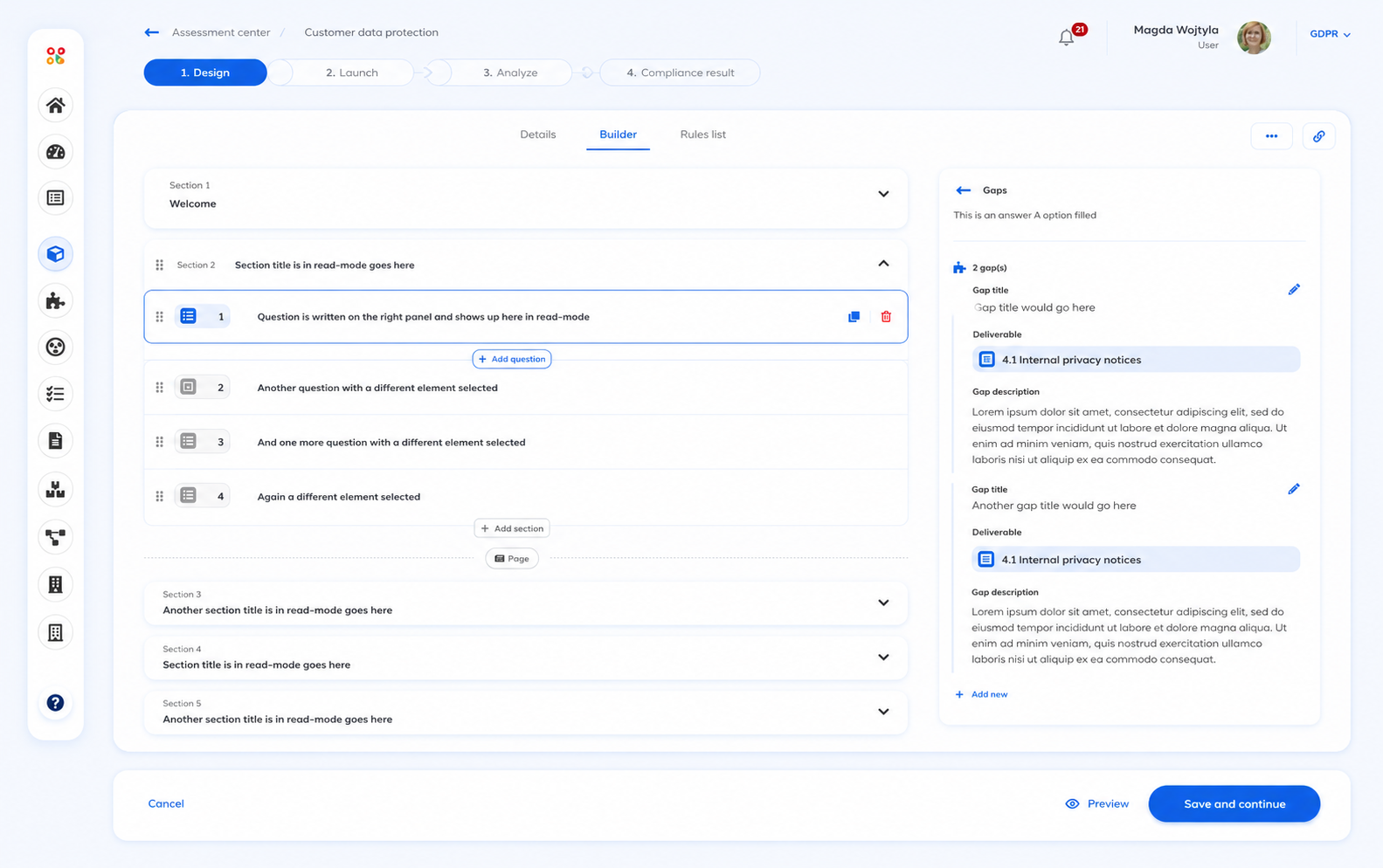
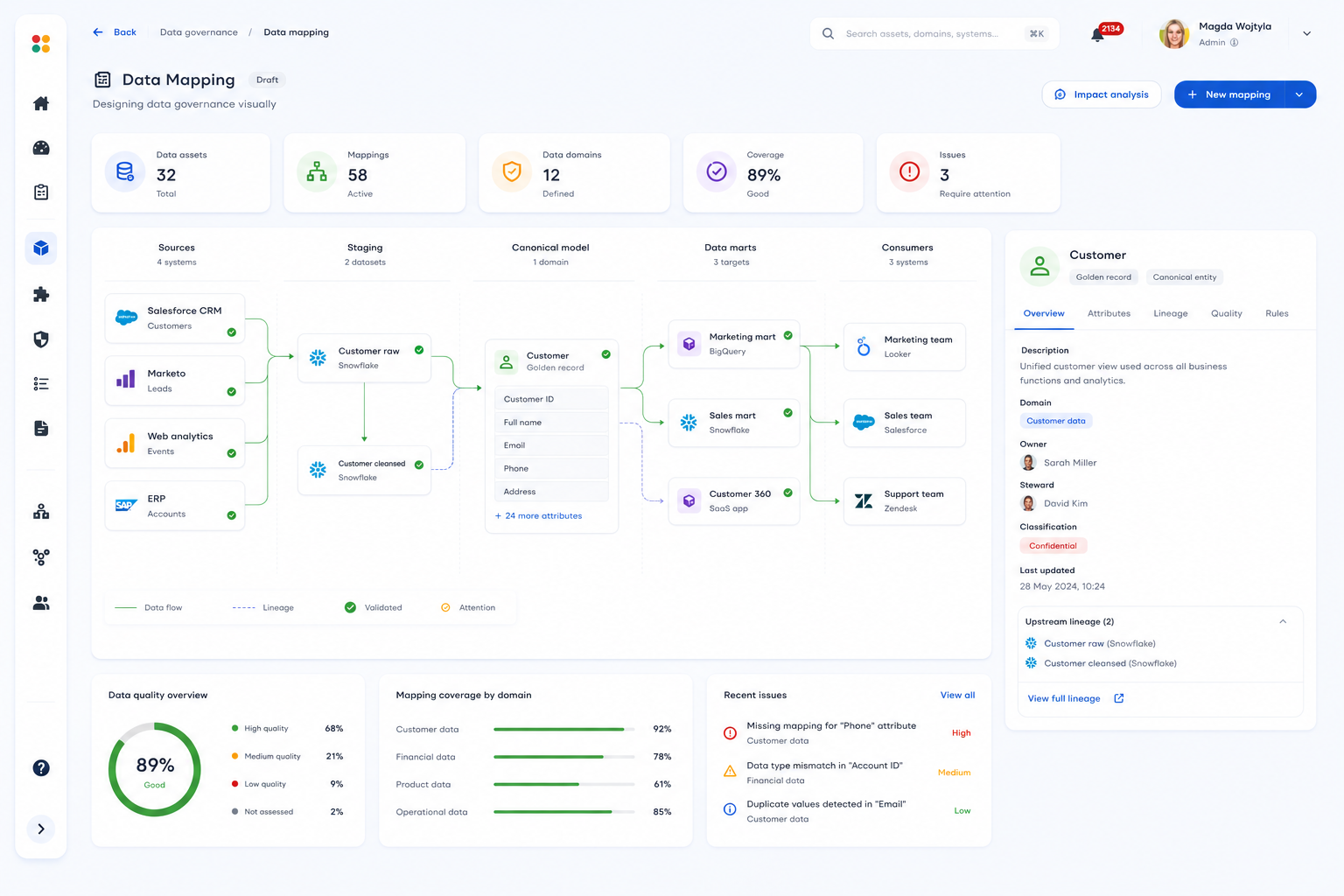
Data mapping was critical. Users needed to visualise how data flowed through their organisation, who had access, and what retention requirements applied. We built a visual interface that made these connections transparent.
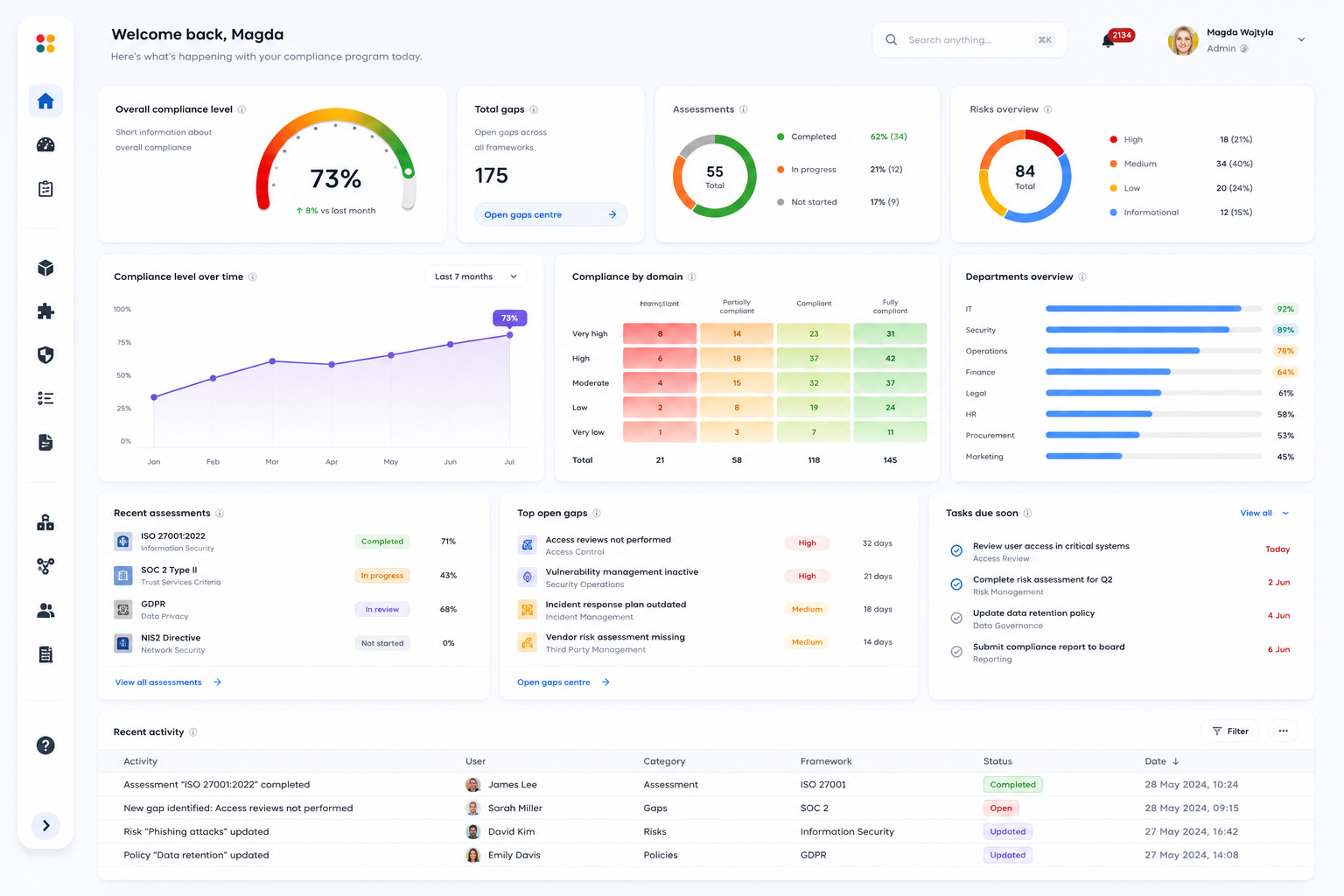
Core platform modules
Assessments
Risk Management
Gap Analysis
Vendor Assessments
Training
User Lifecycle
Results and impact
Product scale
Operational impact
Reflection
Compliance software isn't really about compliance. The biggest challenge was translating complex expert knowledge into workflows ordinary users could confidently complete.
The value in enterprise software isn't storing information. It's helping people know what to do next.
Scalable platforms are built on reusable foundations, not framework-specific optimisations.
Have a product problem worth solving?
I work with product teams on complex challenges across discovery, strategy and design, from focused engagements to embedded freelance support.