Building a two-sided SAP expertise marketplace from concept to scalable foundation
Transforming an early-stage business vision into a scalable marketplace platform by designing the product foundations, ecosystem architecture and reusable design framework from the ground up.
Stakeholder workshops
Marketplace competitors analysed
User ecosystems mapped
White-label platform assessment
Design leadership across strategy, systems and strategy
Strategy & Architecture
- Defined marketplace strategy and business model alignment
- Designed ecosystem architecture for two-sided growth
- Structured product foundations and information hierarchy
Platform Design
- Balanced user needs, business goals and platform capabilities
- Established scalable information architecture and design system
- Designed reusable patterns for both user ecosystems
Strategic Decisions
- Adopt/Extend/Build framework for white-label platform
- Trust mechanisms and credibility indicators as product features
- Multi-sided marketplace ecosystem balance
This case study describes how I structured a complex two-sided marketplace ecosystem, defined product architecture across competing user needs, and established scalable foundations within platform constraints.
Key strategic insights
Trust is the marketplace's primary product
Businesses would not engage without confidence. Trust mechanisms, reputation signals, and credibility indicators became as important as core functionality.
Specialists need credibility before visibility
Profile information alone was insufficient. Users required expertise validation, experience proof, and demonstrated track records before considering engagement.
Platform constraints shape strategic choices
Working within the white-label platform accelerated delivery but required architectural creativity to achieve product objectives.
Platform strategy: Adopt, Extend, Build
Rather than building everything from scratch, I structured strategic decisions around the white-label platform's capabilities. This framework accelerated development while maintaining product control where it mattered most.
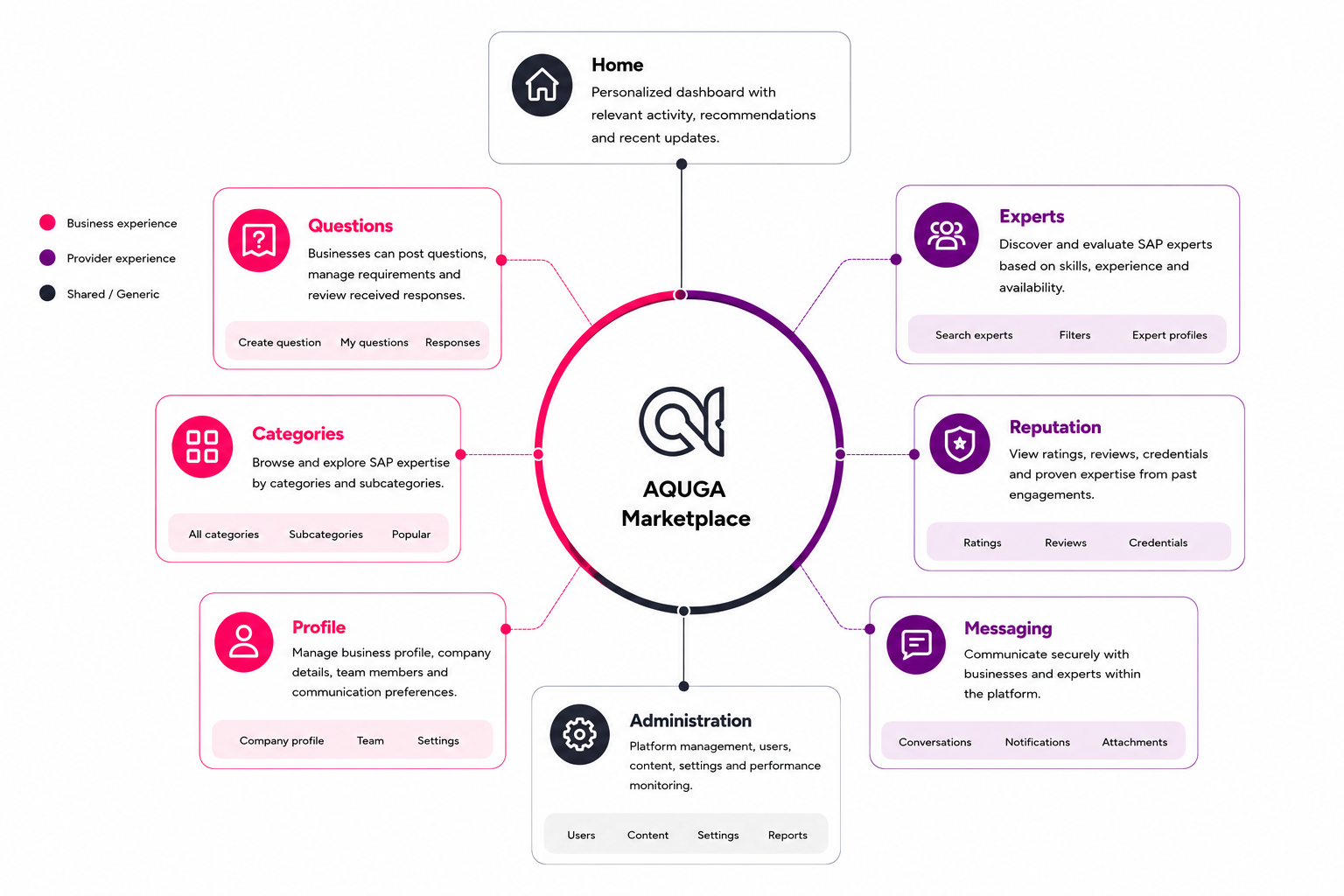
Product architecture
The marketplace architecture was structured around interconnected systems that support ecosystem success: demand generation, supply discovery, trust and verification, communication and matching.
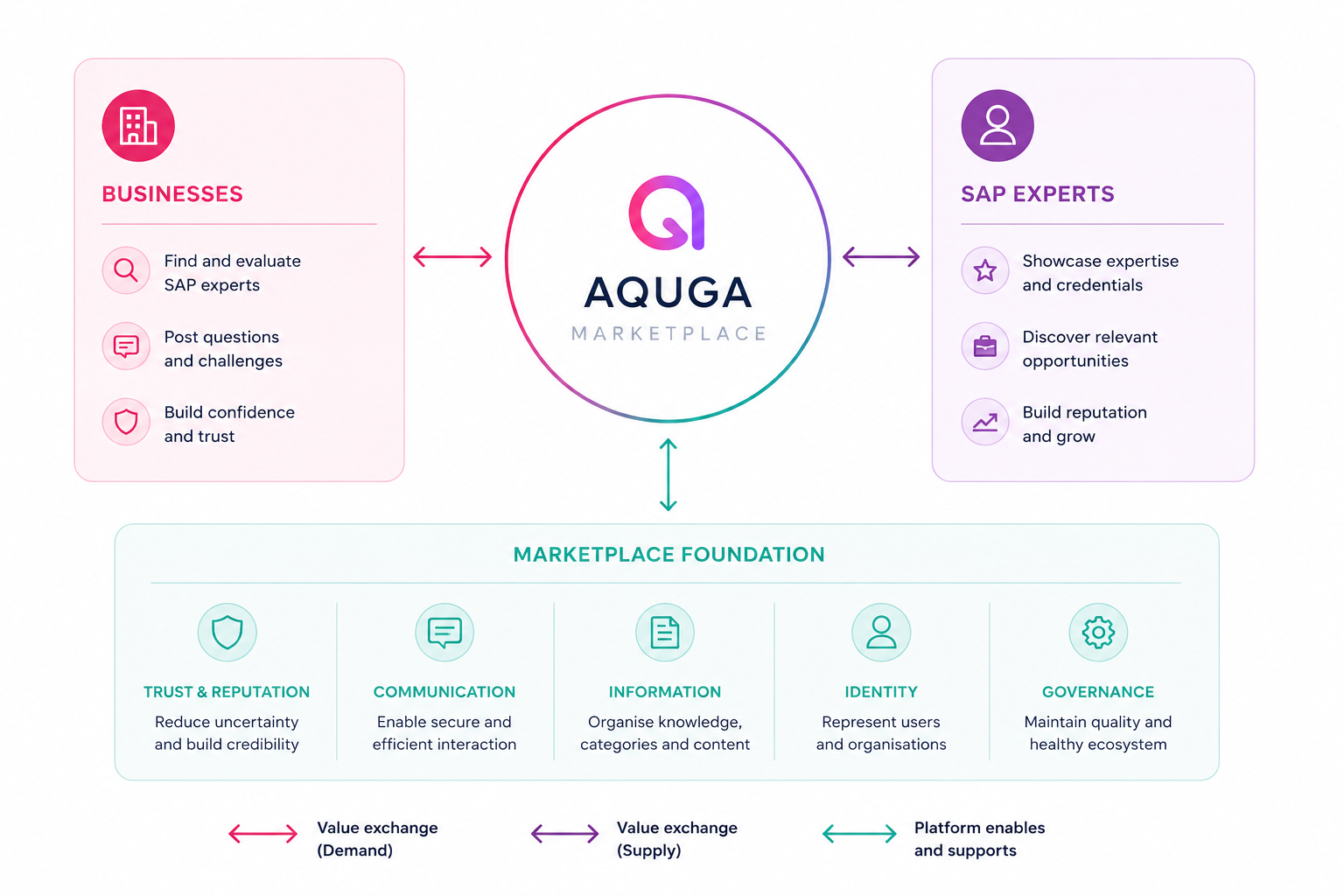
Key user journeys
Finding expertise
Businesses discover and evaluate SAP specialists based on expertise, experience and proven track record.
Demonstrating value
Specialists create visibility, build credibility and generate opportunities through reputation and engagement.
Building trust
Interactions, ratings and successful engagements establish confidence for ongoing relationships.
Growing the ecosystem
Successful transactions expand the marketplace, attracting more users and opportunities.
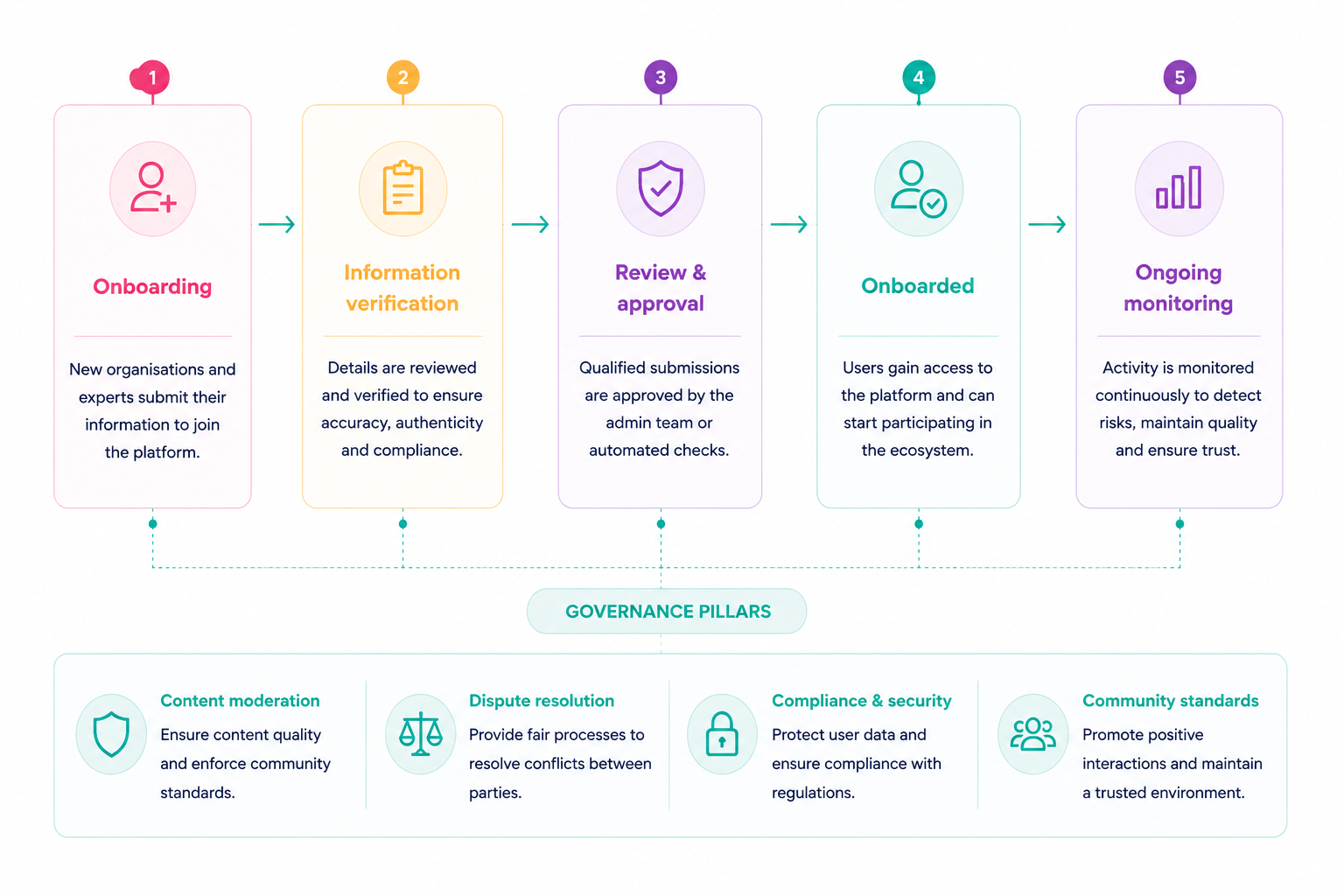
Designing operational governance
Beyond marketplace mechanics, governance structures ensure platform health, user safety and ecosystem balance. This includes onboarding flows, moderation mechanisms, dispute resolution and community standards.
Product foundations
Systems thinking
The marketplace was approached as a connected ecosystem of users, workflows and interactions.
Information architecture
A scalable structure organised marketplace functionality into clear, expandable areas.
Platform design
Reusable interaction models reduced complexity while ensuring consistency.
Scalability
Foundations support new categories, services, user roles and workflows without redesign.
Validation approach
Rather than validating isolated features, the marketplace was validated as an ecosystem. Each iteration tested how changes would impact both user groups simultaneously, ensuring business workflows, specialist journeys and ecosystem health remained in balance.
Results and impact
Complete product blueprint ready for implementation
Defined information hierarchy, user journeys, interaction patterns and decision frameworks across both user ecosystems.
Clear Adopt/Extend/Build decisions
Identified which platform capabilities to leverage, extend or replace — reducing technical risk and accelerating delivery.
Extensible architecture for future growth
Established patterns and systems that support new marketplace capabilities without fundamental redesign.
Shared understanding across stakeholders
Created alignment between business goals, user needs and platform capabilities — reducing future product risk.
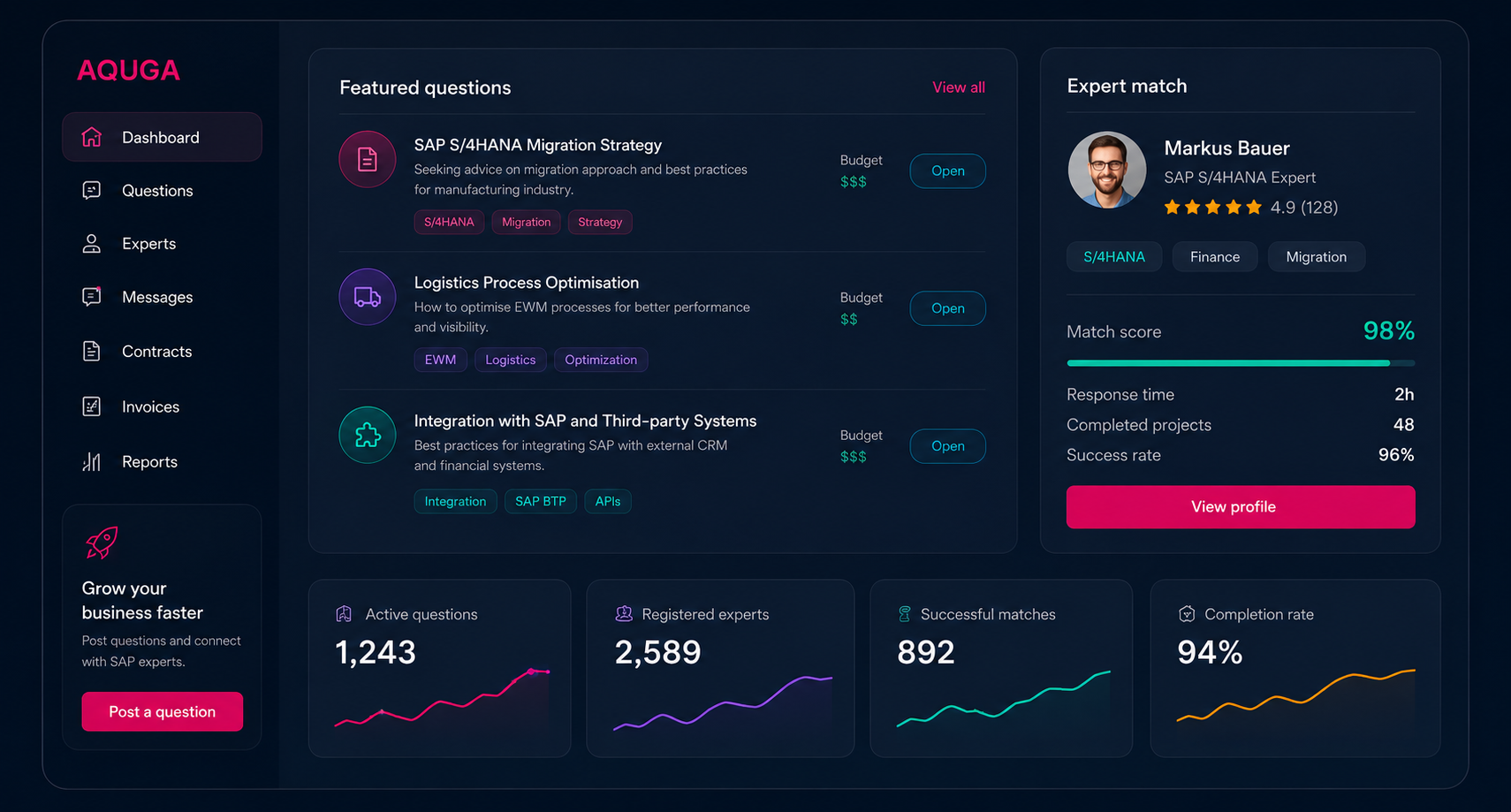
UI Screenshots

Businesses discover expertise
The question-centric interface allows businesses to post challenges and browse SAP specialists with proven credentials, ratings and relevant experience. Discovery is driven by expertise matching and trust signals.
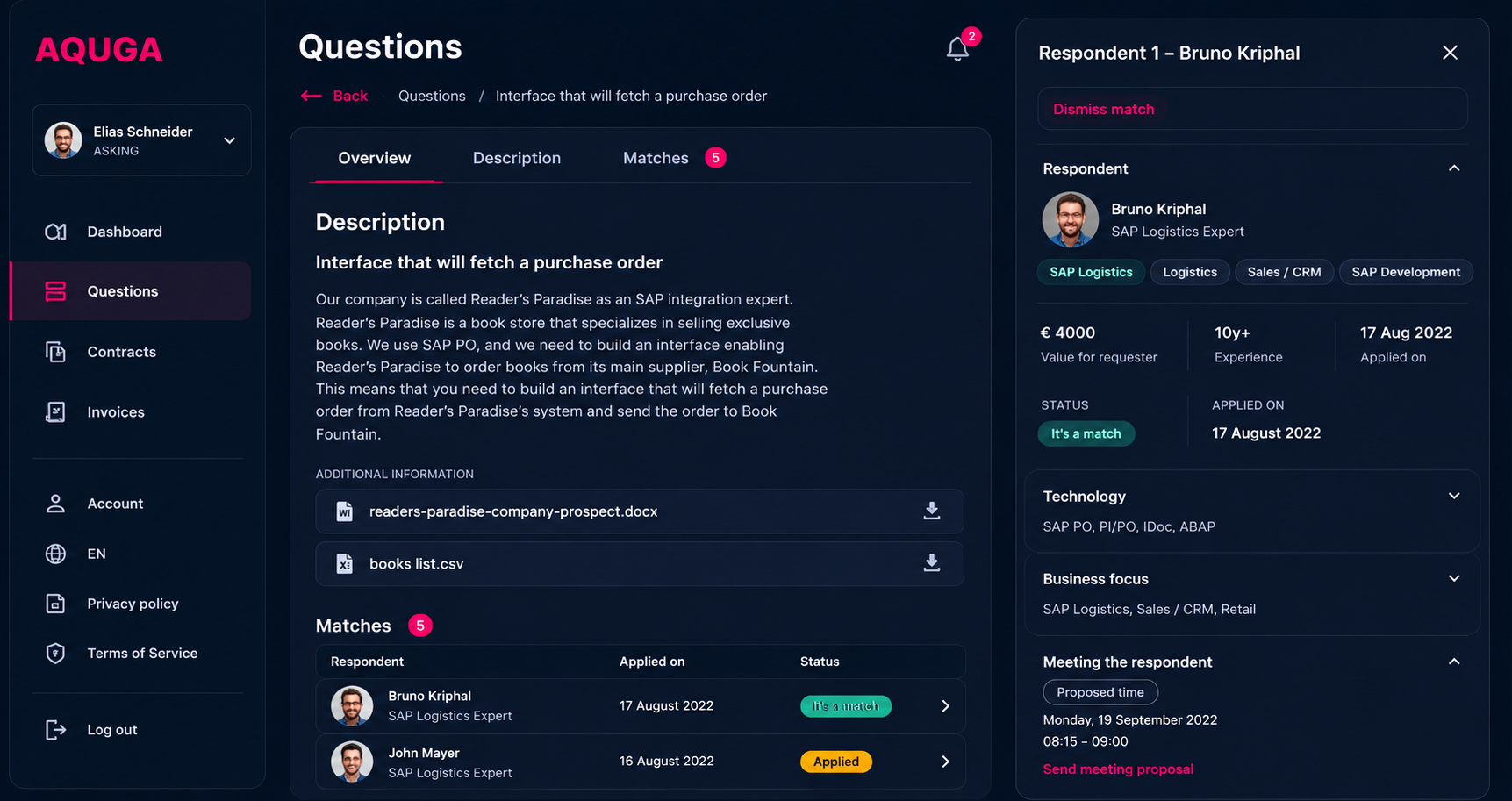
Specialists showcase credibility
Professional profiles display expertise, past projects, verified credentials and client ratings. Specialists can apply to questions and manage their marketplace presence.
Results and impact
User outcomes
- Businesses gain confidence in specialist expertise through trust mechanisms and verified credentials
- Specialists build visibility and generate opportunities through credibility-first discovery
Operational outcomes
- Streamlined specialist onboarding with verification and compliance mechanisms
- Governance systems maintain platform health and ecosystem balance
Business outcomes
- Scalable marketplace platform ready for multi-market expansion
- Reduced time-to-launch through platform strategy alignment
Reflection
Multi-sided marketplaces require systems thinking. The architecture is the product.
Trust is designed, not featured. Every decision contributes to confidence.
Platform constraints force clarity and creative prioritisation.
Have a product problem worth solving?
I work with product teams on complex challenges across discovery, strategy and design, from focused engagements to embedded freelance support.